
King of Morocco sets priorities for 2027 for the Kingdom's new Executive
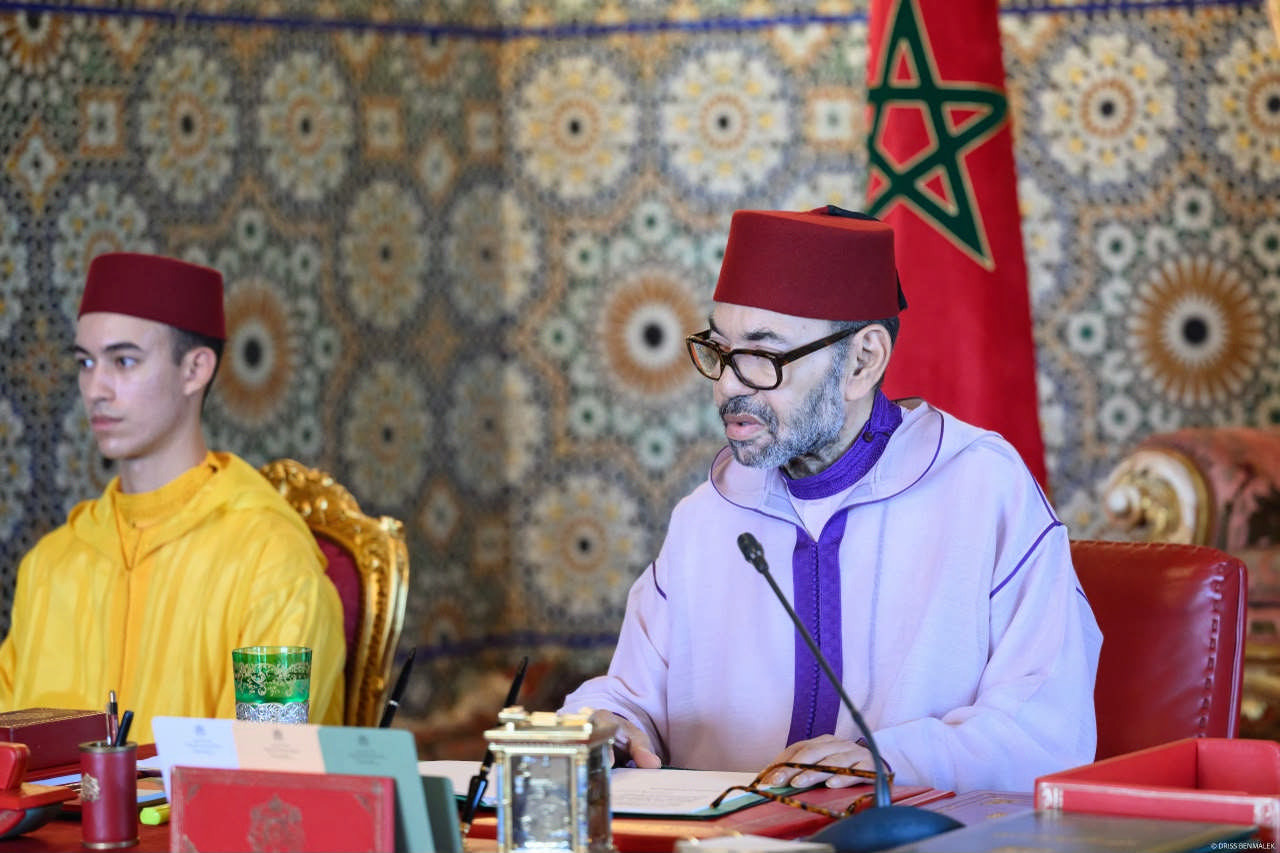
The King of Morocco, Mohammed VI, presided this Saturday at the Royal Palace in Rabat over a meeting of the Council of Ministers dedicated to the analysis and approval of the general guidelines of the State Budget Bill for 2027. The meeting was also attended by Crown Prince Moulay El Hassan, according to a statement from the Royal Cabinet.
The document establishes five major priorities for the country's economic and social policy in the coming year, highlighting the recovery of families' purchasing power, the integration of young people into the labor market, territorial development, the security of strategic resources, and the mobilization of investment to sustain economic growth.
The budget proposal emerges in an international context marked by geopolitical instability, rising costs associated with conflicts, increased protectionist trends, and heightened competition in the energy, technology, and finance sectors.
In presenting the general outlines of the project, the Minister of Economy, Finance and Public Performance highlighted the need to preserve the resilience of the Moroccan economy in the face of external uncertainties, maintaining balanced public accounts and pursuing investments considered priorities.
The economy is expected to grow 4.7% in 2026.
According to projections presented to the Council of Ministers, the Moroccan economy is expected to grow by 4.7% by the end of 2026. Inflation is expected to be 0.7%, while the budget deficit is projected to decrease to 3% of Gross Domestic Product (GDP).
These indicators form the macroeconomic framework for the preparation of the 2027 budget, at a time when authorities are seeking to reconcile financial stability with the financing of social policies, infrastructure and development programs.
The statement from the Royal Cabinet underlines that Morocco continues to strengthen its economic resilience in the face of changes in the international environment, seeking to preserve the conditions necessary for the execution of its development projects.
A budget contingent on the implementation of the reforms.
The guidelines presented to the Council of Ministers seek to articulate three dimensions: macroeconomic stability, social protection, and structural transformation of the economy.
On the one hand, projections for growth, inflation, and the budget deficit establish the benchmarks for managing public finances. On the other hand, social programs, youth employment programs, and territorial development programs require resources and implementation capacity.
The challenge will be to transform the announced priorities into concrete results for families, young people, businesses, and regions, ensuring that investments reach their intended recipients and produce measurable economic and social impacts.
The mobilization of approximately 25 billion dirhams for territorial development stands out as one of the financial commitments outlined in the statement, while market and price reform and the national youth program constitute two of the main areas of intervention planned for the coming years.
The meeting on October 17th thus marks a milestone in the preparation of the Moroccan budget for 2027, the implementation of which must reconcile development ambitions with the demands of financial sustainability and responding to social needs.
Outras noticias
policy
Government raises $95 million to mitigate the effects of "El Niño"
2026-11-10
Society
BCI brings Christmas Solidarity to the Arco-Íris Shelter Center
2026-11-10
policy
Paraguayan president faces impeachment
2026-11-07

Society
Tropical Depression Formed in the Indian Ocean
2026-11-07
Society
BCI hosts Inter-University Conference on Access to Justice
2026-11-07
Copyright Jornal Preto e Branco All rights reserved . 2025