
King Mohammed VI wants accelerated reforms and demands greater social justice in Morocco
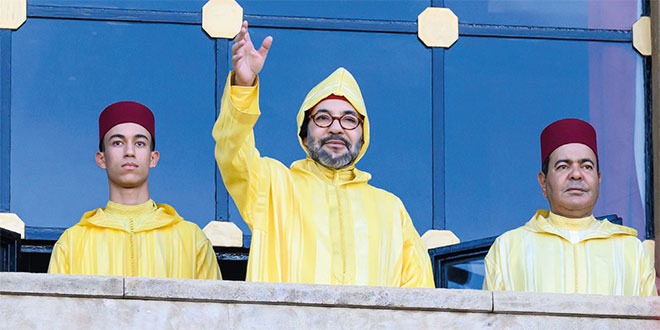
The Moroccan king advocates for a new generation of strategic investments, places youth at the center of public policies, demands an end to delays in decentralization, and announces a new vision for international cooperation, with a focus on migration and relations with Spain.
Rabat, October 9, 2026- King Mohammed VI of Morocco advocated on Friday for accelerating economic and administrative reforms, strengthening social and territorial justice, and mobilizing new investments in strategic sectors, including water, energy, food security, industry, the digital economy, and artificial intelligence. The monarch was speaking before Parliament on the occasion of the opening of the first session of the first legislative year of the 12th Legislature, in a speech that outlined the political and economic priorities for the next stage of the Kingdom's development.
The intervention highlighted the need to transform economic growth into better living conditions for citizens, through job creation, modernization of public services, strengthening investment and export capacity, and a more balanced distribution of opportunities among the different regions of the country.
Mohammed VI considered that the new legislative and governmental cycle should represent a turning point for Morocco, with a view to consolidating its ambition to establish itself as an emerging economic power, without losing sight of the demands of social inclusion.
The sovereign summarized this orientation by advocating a balance between economic dynamism and social and territorial justice, two objectives that, in his view, should guide political decisions and the implementation of reforms.
The speech also addressed the need to make public administration more efficient, accelerate decentralization, strengthen the role of the private sector, and place young people at the center of development policies. On the international front, the King reaffirmed the importance of international partnerships, but warned that migration cooperation faces limitations that require a new approach.
Economic growth with social and territorial justice.
One of the main themes of the speech was the need to reconcile Morocco's economic ambition with the reduction of social and territorial inequalities. For Mohammed VI, development should not be evaluated solely by the expansion of economic activity or the size of investments, but also by the capacity to improve the living conditions of the population and guarantee more balanced opportunities.
The monarch stated that the new mandate should contribute to consolidating a Morocco committed to becoming an emerging economic power while simultaneously achieving a balance between growth and enhanced social and territorial justice.
The message points to an agenda that seeks to reconcile competitiveness, productive modernization, and inclusion. Within this framework, the challenge lies in ensuring that the benefits of growth reach different segments of the population and territories, reducing disparities in access to public services, employment, and investment opportunities.
The King framed this ambition within a path of political, diplomatic, economic, and social reforms that, he stated, have contributed to transforming the country. Recalling a statement made in Parliament in 2014, Mohammed VI once again highlighted pride in Moroccan identity, presenting it not as a manifestation of complacency, but as a source of collective responsibility. "National pride here is not a form of vanity, nor an expression of self-satisfaction. On the contrary, it is the catalyst that transforms the feeling of belonging into responsibility, confidence into national duty," he stated.
In the economic sphere, Mohammed VI advocated for the creation of a new generation of major national strategies capable of responding to international geoeconomic transformations and strengthening the Kingdom's autonomy and productive capacity. Among the sectors identified by the sovereign are water, energy, food security, industrial development, the digital economy, and artificial intelligence.
The inclusion of these areas in the strategic agenda reflects concern about Morocco's ability to respond to risks related to the availability of essential resources, changes in supply chains, technological transformation, and industrial competitiveness.
Youth at the heart of public policies
The situation of young people occupied a central position in the royal intervention. Mohammed VI argued that their concerns should be at the forefront of public policies and the actions of government bodies.
The sovereign called for the construction of an integrated vision that links education, vocational training and economic integration, with the aim of guaranteeing equal opportunities and facilitating the transition of young people to professional life.
From this perspective, education and access to employment are essential elements for strengthening the confidence of new generations in their own abilities, in national institutions, and in future prospects within the country.
The King stated that young people should be able to build a better future within a framework that ensures "freedom, dignity and stability".
The focus on youth links economic policy to social cohesion. Job creation, professional training, and access to opportunities are no longer treated solely as sectoral objectives but become part of a broader vision of development and trust in institutions.
Migration: the current cooperation model is exhausted.
Migration policy and relations with international partners, particularly Spain, constituted one of the most sensitive segments of the speech. Mohammed VI acknowledged the results achieved by Morocco in managing migration flows, but considered that the current cooperation model no longer offers sufficient answers to the existing challenges.
The monarch argued that the Moroccan approach has produced concrete results, but warned that the recurrence of crises demonstrates the need to review the mechanisms of international cooperation in this area.
The statement represents a call for a reformulation of understandings between Morocco and its partners in an area involving border control, irregular migration, child protection, asylum procedures, and combating criminal networks.
The sovereign extended this assessment to cooperation with Spain, a neighboring country with which Morocco maintains a partnership in several sectors, including the fight against irregular immigration.
Despite acknowledging the progress made in bilateral relations, Mohammed VI pointed to difficulties related to certain legal provisions and judicial decisions which, in his assessment, do not reflect the reality of migration challenges.
From the King's perspective, these obstacles hinder the repatriation of minors and people who, he stated, improperly claim refugee status, in addition to favoring the activity of criminal networks.
The statements reflect the Moroccan sovereign's position on the functioning of migration mechanisms. However, their concrete application involves legal and humanitarian issues that depend on the respective legal frameworks and the international obligations of the countries involved.
"No pressure, threats or blackmail" in international partnerships.
In his address to foreign relations, Mohammed VI reaffirmed that Morocco intends to remain a responsible international partner committed to fulfilling its obligations. Conversely, he argued that the country should receive equal treatment from its partners.
The monarch rejected what he described as irresponsible statements from certain political and media sectors and criticized the exploitation of the migration issue for purposes of political pressure. "The partnership is a sovereign choice and a voluntary commitment, which cannot be subject to any pressure, threat or blackmail," he declared.
The statement establishes a clear position on the principles that, in the Moroccan view, should guide cooperative relations: reciprocity, respect for commitments made, and the absence of political impositions.
Although Spain was the main example mentioned in this segment, the message was presented within a broader context of relationships with international partners.
Mohammed VI announced that Morocco will present its partners with a strategic document aimed at defining a new direction for cooperation.
Outras noticias
Society
CIM challenges the legality of the suspension announced by ICM
2026-10-15

Society
CoWork Lab celebrates 14 years in Mozambique and inaugurates its seventh business center in Maputo
2026-10-15
Society
BCI reinforces support for female entrepreneurship in Beira
2026-10-15
policy
Edson Macuácua is the new Minister of Education and Culture
2026-10-15
policy
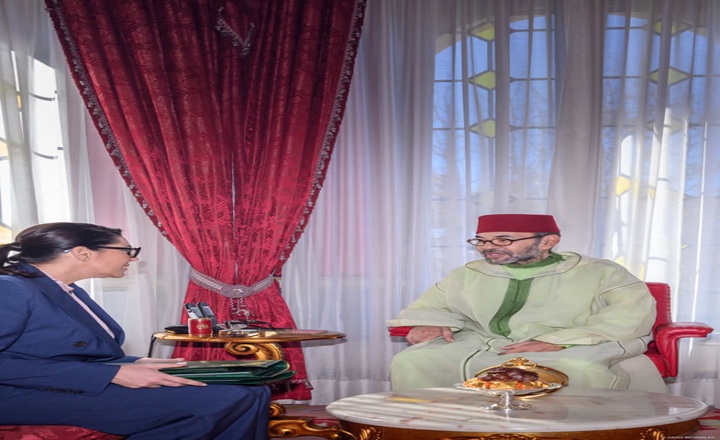
Morocco: King Mohammed VI demands mobilization and responsibility in the formation of the new government
2026-10-14
Copyright Jornal Preto e Branco All rights reserved . 2025