
How much did the liberation of the country cost? How many rivers still need to be crossed before the people feel truly free from this historical debt?
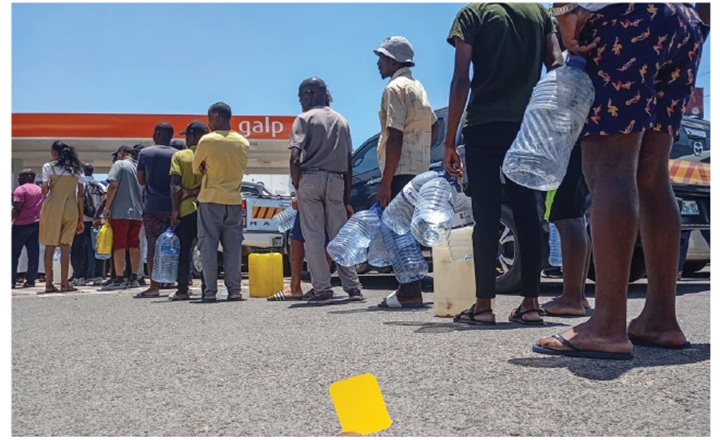
The liberation of Mozambique was one of the greatest achievements in our history. It was built with courage, sacrifice, and human lives. No one of good faith can deny this legacy. But history also teaches that no achievement is a blank check and that no party can claim an eternal right to govern simply because it liberated a nation. Fifty years after independence, an uncomfortable but necessary question arises: how long will the Mozambican people continue to pay a historical debt that seems never-ending? How many more rivers will they have to cross before freedom ceases to be merely a glorious memory and becomes a concrete reality of dignity, justice, prosperity, and hope?
Liberation served to expel colonialism, not to replace one power logic with another in which the State is often perceived as excessively dependent on the interests of the political elite. A people does not fight to exchange one master for another. They fight to be masters of their own destiny. And it is precisely here that the great question of contemporary Mozambique lies: is the country moving towards an increasingly robust democracy or towards a system in which remaining in power has become an end in itself?
FRELIMO, as the party that has governed the country since independence, must accept a basic truth: time transforms historical achievements into political responsibility. Those who govern for decades can no longer explain present problems solely by the mistakes of the past. A point is reached where the accumulated difficulties belong entirely to those who continue to lead the State.
Today, many Mozambicans look at the country with a mixture of frustration and resignation. Poverty persists. Unemployment remains high. The cost of living is rising. Young people finish school without clear prospects. Entire families live in a constant struggle for survival. In too many cases, talent is no longer seen as a sure path to progress, while the perception grows that proximity to power, influence, and networks of interests open doors that remain closed to the average citizen. Even when this perception does not fully correspond to reality, it erodes trust in institutions and weakens national cohesion.
Public health represents one of the most painful faces of this crisis. Professionals in the sector have repeatedly denounced shortages of medicines, equipment, supplies, human resources, and better working conditions. Overburdened hospitals, endless queues, and difficulties in accessing care affect thousands of citizens daily. Every delay in responding to structural problems has human consequences. When a health system fails to provide adequate responses to the most vulnerable, the price is not measured only in statistics, but in avoidable suffering.
In education, the challenges remain equally profound. There are schools lacking basic resources, with overcrowded classrooms, a shortage of teachers, and insufficient infrastructure. Teachers continue to demand better working conditions and greater professional recognition. A nation that does not invest consistently in education compromises the quality of its democracy, its economy, and its capacity for innovation. No patriotic discourse can replace a well-equipped classroom, a motivated teacher, and a student with real opportunities to learn.
Meanwhile, an entire generation grows up observing a country rich in natural resources, but where prosperity remains distant for many. This contradiction fuels a dangerous sentiment: that the future will always be better for a few than for all. No society remains stable when hope ceases to be a collective project.
Political life also inspires concern. A democracy thrives on debate, criticism, and the exchange of ideas. Whenever allegations of intimidation, political violence, restrictions on civic space, or concerns about freedom of expression arise, the State has a duty to respond with transparency, respect for the law, and guarantees of fundamental rights. Citizens' trust depends on the certainty that everyone can participate in public life without fear.
Another unavoidable issue is the role of defense and security forces in the context of social protest. In any democratic state, the maintenance of public order must be accompanied by criteria of legality, necessity, and proportionality. Whenever there are credible allegations of excessive use of force or civilian deaths, independent investigations and accountability are essential when violations are identified. The authority of the state is strengthened when it acts within the law, not when it deviates from it.
The succession of strikes, work stoppages, demands, and demonstrations in different sectors of society should not be interpreted merely as a problem of administrative discipline. Above all, it is a sign of the deteriorating relationship between the state and its citizens. When doctors, teachers, civil servants, and other workers repeatedly resort to protest to voice their concerns, it reveals structural problems that demand dialogue and solutions, not just crisis management.
Meanwhile, public debates continue to emerge regarding corruption, influence peddling, and transparency in the management of public resources. High-profile cases related to organized crime, including significant drug seizures within the country, reinforce the need for strong, independent institutions capable of investigating all those involved, without distinction. The greater the confidence in the impartiality of institutions, the greater the citizens' confidence in the State itself.
Perhaps Mozambique's biggest problem is not just economic. It is moral and institutional. When a citizen ceases to believe that the law protects everyone equally, a silent crisis sets in that no macroeconomic indicator can hide. A state exists to serve the Republic; never to be confused with a party, a group, or a political generation.
FRELIMO played an undeniable historical role in the struggle for independence. This fact deserves recognition. But precisely for this reason, it should be the first to understand that no historical legitimacy replaces the permanent need for accountability. The authority gained in the past does not exempt one from responsibility in the present.
Patriotism is not about avoiding criticism of the government. It's about putting the national interest above any political expediency. Loving Mozambique means demanding better hospitals, better schools, more credible institutions, a more inclusive economy, and a political environment where dissent is treated as part of democracy, not as an obstacle.
The time has come to recognize that governing for decades implies accepting a proportionate level of responsibility for the results achieved. Citizens do not demand perfection. They demand honesty, competence, transparency, and the ability to correct mistakes. They demand a state that works for everyone, not just for those closest to the centers of decision-making.
The question that titles this Yellow Card therefore remains open: how much did the liberation of the country cost? Not only in lives lost in the struggle, but also in deferred expectations, wasted opportunities, and generations that continue to wait for a future compatible with Mozambique's potential. And how many people must die, how many lives must be degraded by the historical debt of liberation?
History will not be kind to the heroes of liberation, nor to the new generation of followers who have become dangerously more greedy than their mentors. It's not just because of what they promised and forgot, but above all because of the poisoned gift they delivered to the people. Independence was an extraordinary achievement, but preserving it requires guaranteeing strong institutions and a dignified life for citizens. This is the commitment they should maintain in the present, not just in the memory of the past, and there is no doubt that this is the formula for calculating the true greatness of any political project.
This is, therefore, a Yellow Card addressed to the Government: a warning that public trust needs to be regained through results, dialogue, responsibility, and respect for institutions. Because no country lives solely on the glories of its history. Above all, it lives on how it treats its citizens in the present and the hope it can offer for the future.
Outras noticias
Culture
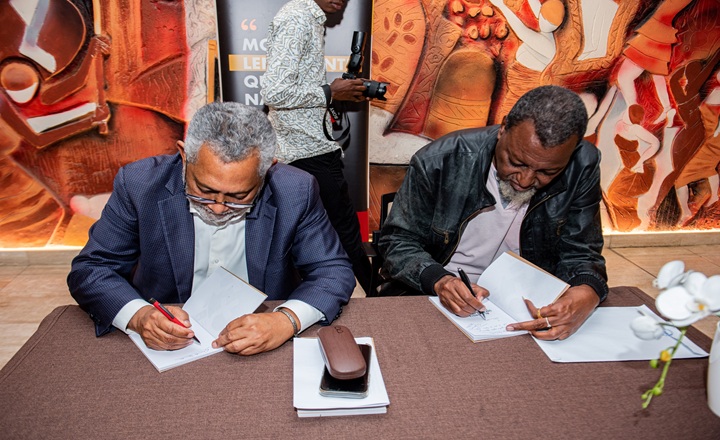
Launched at BCI, a book that immortalizes memories and humor of Zambézia
2026-10-02

Society
International Coffee Day
2026-10-02
Society
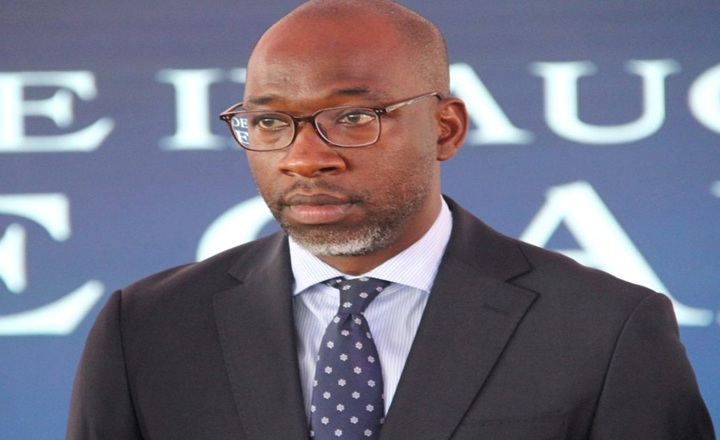
Minister Mathlombe squanders his term on empty promises
2026-10-02
policy
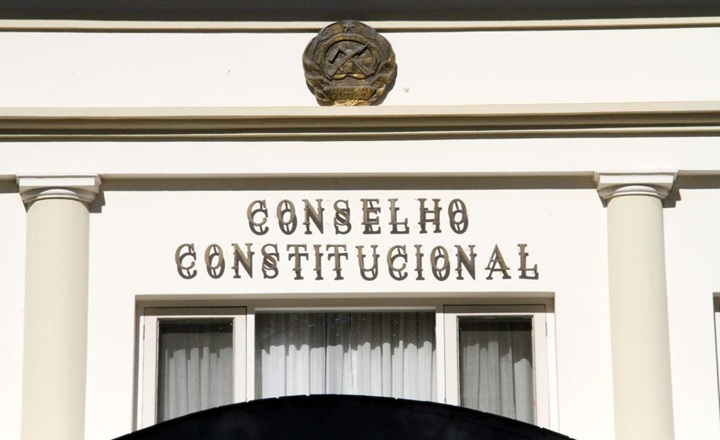
Constitutional Council Awards Purchase of Luxury Vehicles for 49.5 Million Meticais
2026-10-01

Culture
International Coffee Day: Aroma, Flavor, and History
2026-09-30
Copyright Jornal Preto e Branco All rights reserved . 2025