
"Fish and Sea" - Our Bread and Life
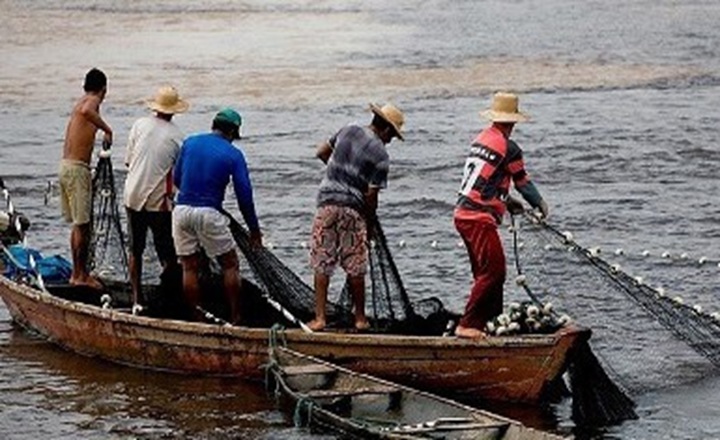
At a time when overfishing, pollution, and climate change threaten the Mozambican coast, researcher and marine resources expert Dr. Atanásio Brito defends a clear vision: the country's food security is not only resolved in the fields, but also at sea. In an interview with our newspaper, the author of the article "Food Security in Mozambique Begins with Empowered Coastal Communities" explains why empowering artisanal fishermen and protecting the marine ecosystem is a matter of national survival.
Watch the interview below with Dr. Atanásio Brito, conducted by Alexandre Mabasso.
JP&B: Fish represents about 50% of the animal protein consumed by Mozambicans. Why is this data so relevant to food security?
AB:This number reveals the country's deep dependence on the sea. For coastal and rural families, fish is not a supplement; it is the main source of accessible protein. Beyond protein, it provides vitamins and fats essential for child development and maternal health. When we protect fisheries resources, we are not only saving a species, we are saving the health, jobs, and livelihoods of thousands of Mozambicans.
JP&B: There is a clear conflict between artisanal and industrial fishing. While large boats deplete the sea, small-scale fishermen are unable to go out to sea. What should be the government's priority?
AB:The priority should not simply be pushing artisanal fishing out to sea, as this would be risky without safe vessels, engines, fuel, and training. The key lies in three pillars: rigorous enforcement to prevent industry from encroaching on prohibited zones; combating illegal fishing and the use of destructive gear; and restoring habitats (mangroves and reefs) where fish reproduce. Furthermore, artisanal fishermen need more than just catching fish; they need ice, credit, and markets so that well-preserved fish generate more income without increasing pressure on the ocean.
JP&B: Many people associate pollution in the Indian Ocean with global warming and the intensity of cyclones. Is this relationship direct?
AB:It's not a direct consequence, but it's dangerous. Plastic and sewage pollution doesn't cause global warming (that's due to greenhouse gases), but it weakens the ecosystems that protect us, such as mangroves and reefs. On the other hand, global warming makes the ocean warmer, and this extra energy fuels more intense and rainy cyclones. When we combine environmental destruction with a more aggressive climate, coastal communities become doubly vulnerable.
JP&B: The European Union is warning about the excess of plastic in the oceans. If fish ingest this plastic, do microplastics end up on our plates? Should we be concerned?
AB:Yes, this possibility is real. Plastics degrade into microplastics that are ingested by fish and shellfish. Although most of it ends up in the digestive system (which we remove), the risk is greater in species consumed whole, such as shrimp or mussels. The World Health Organization considers this an emerging contaminant, but the benefits of consuming fish still outweigh the known risks. The solution lies at the source: reducing the use of disposable plastics, improving waste treatment, and holding the industry accountable, instead of penalizing the fish consumer.
JP&B: The ocean is said to be the "climate regulator." How does this mechanism work, and what does it mean for Mozambique?
AB:The ocean is the planet's great air conditioner. It absorbs heat and carbon dioxide, distributes temperature through currents, and is the main source of rain for the continents. What happens in the sea affects agriculture and inland rivers. However, this service comes at a cost: by absorbing so much CO2, the ocean becomes more acidic and loses oxygen, affecting corals and fish. Protecting the ocean is, therefore, protecting the climate system that guarantees our own existence.
JP&B: Some experts say that fish raised in tanks (aquaculture) is safer than fish caught in the sea. Do you agree?
AB:It's impossible to generalize. Safety depends on management, not origin. A farmed fish can be safe if it has quality water and controlled feed, but it can be dangerous if there is overcrowding or misuse of medication. Wild fish is healthy if it comes from clean waters and is well-preserved. In Mozambique, aquaculture has enormous potential, but it must be carried out with strict environmental regulations, avoiding the destruction of mangroves and water pollution.
JP&B: Leave a final message about the future of the sea in Mozambique.
AB:My message is simple: the sea can feed us for generations, but only if we take care of it today. It's not enough to ask communities to conserve; we need to give them rights, knowledge, and the means to monitor the situation. We need to recognize the vital role of women in the fish value chain. Food security begins at sea, but it includes preserving fish, reducing losses, and ensuring fair prices. The ocean is not inexhaustible. It's like a field: if we only take from it and never tend to it, one day it will stop producing. If we protect breeding grounds and combat illegal fishing, the sea will continue to be our greatest ally.
Outras noticias

Culture
Launched at BCI, a book that immortalizes memories and humor of Zambézia
2026-10-02

Society
International Coffee Day
2026-10-02

Society
Minister Mathlombe squanders his term on empty promises
2026-10-02
policy
Constitutional Council Awards Purchase of Luxury Vehicles for 49.5 Million Meticais
2026-10-01
Culture
International Coffee Day: Aroma, Flavor, and History
2026-09-30
Copyright Jornal Preto e Branco All rights reserved . 2025