
Fatima Ezzahra El Mansouri becomes the first woman to head the Government of Morocco
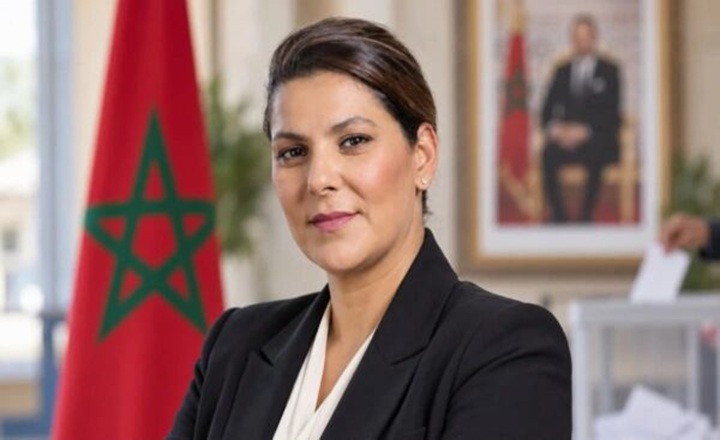
The appointment by King Mohammed VI opens a new political chapter in the country; the leader of the Authenticity and Modernity Party will now have to form a governing coalition and meet strong social, economic, and youth expectations.
Rabat, September 29, 2026King Mohammed VI on Tuesday appointed Fatima Ezzahra El Mansouri, coordinator of the collective leadership of the Authenticity and Modernity Party (PAM), as Head of Government of Morocco, tasking her with forming the new Executive.
The decision was announced by the Ministry of the Royal Household, Protocol and Chancellery after a hearing held at the Royal Palace in Rabat. The appointment, made under Article 47 of the Moroccan Constitution, follows the legislative elections of September 23, in which the PAM obtained the largest number of seats in Parliament.
El Mansouri's selection also has historical significance: she becomes the first woman to head the Government of Morocco and the second woman to serve as Prime Minister in an Arab country, after Najla Bouden led the Government of Tunisia between 2021 and 2023.
An appointment with historical significance.
Speaking to the press after the audience with the King, El Mansouri described her appointment as a "historic moment" for Morocco and stated that the fact that a woman is assuming the leadership of the Government for the first time is a source of pride for Moroccan women.
The new Head of Government also stated that she had received guidance from the Sovereign for managing the next phase and announced that she would immediately begin consultations within the WFP and with the other political forces.
According to El Mansouri, the objective will be to present a government capable of meeting the expectations of the King and the citizens, with particular attention to the concerns of young people. The leader also promised a program based on "realistic and concrete solutions."
The statement immediately establishes the formation of the new Executive as the first major political task for the new Head of Government.
PAM won the legislative elections, but will have to look for partners.
El Mansouri's appointment is a direct result of the configuration produced by the September legislative elections. The Authenticity and Modernity Party won 97 of the 395 seats in the House of Representatives, ahead of the National Rally of Independents (RNI), which obtained 66 seats, and the Istiqlal Party, which won 65. The result does not give the PAM an absolute majority, making it necessary to negotiate with other political forces to form a parliamentary majority and form a government.
This reality should transform the coming weeks into a period of intense political negotiations. The new Head of Government will have to reconcile the composition of the Executive, the distribution of ministerial portfolios, and programmatic priorities with the interests of the parties that may form the future majority.
The Moroccan constitutional system establishes that the King appoints the Head of Government from the party that comes in first place in the elections for the House of Representatives. It is within this framework that Mohammed VI appointed El Mansouri to lead the formation of the new Executive.
From mayor of Marrakech to head of government.
The rise of Fatima Ezzahra El Mansouri to the position of Head of Government concludes a political career spanning almost two decades. Born in Marrakech on January 3, 1976, El Mansouri is a lawyer by training. She studied Private Law at Mohammed V University in Rabat, obtained a master's degree in Business Contract Law from the University of Montpellier in France, and attended Anglo-Saxon Law studies at Pace University in the United States. She has been a member of the Marrakech Bar Association since 2005.
His entry into politics occurred in 2007, through the Movement of All Democrats. The following year, he participated in the founding of the Authenticity and Modernity Party, a political formation created in 2008 that would become one of the main forces in the Moroccan party system.
In 2009, El Mansouri was elected president of the Marrakech Municipal Council, becoming the first woman to hold the position of mayor of the city. She held the post until 2015 and returned to municipal leadership in 2021.
In parallel, she built a parliamentary career. She was elected to parliament in 2011 and re-elected in 2016, accumulating experience in local and national politics.
Between 2015 and 2024, she chaired the National Council of the WFP. Since 2024, she has coordinated the party's collective leadership, a position she held when she was nominated to head the Government.
Five years in government
El Mansouri's governmental experience began in October 2021, when she was appointed Minister of National Territorial Planning, Urbanism, Housing and Urban Policy.
The portfolio placed her at the center of some of the structural issues of Moroccan development: land use planning, urbanization, housing, city development, and policies related to urban growth.
Ministerial experience is cited as one of the credentials that now support his move to head the Executive branch.
The combination of experience in local government, parliament, political parties, and government distinguishes the trajectory of the new Head of Government, who went through different levels of public administration before reaching the leadership of the Executive branch.
A woman with political and municipal experience.
El Mansouri's career gained particular visibility through his experience in Marrakech.
The city is one of Morocco's main economic, tourist, and cultural centers, and the municipal administration has placed the leader before issues directly related to urbanization, infrastructure, housing, tourism, and urban development.
His connection to local governance also extended to international organizations of local government officials. He is a member of the International Association of Francophone Mayors (AIMF) and vice-president of the Moroccan Association of Presidents of Municipal Councils, according to the official biography released after his appointment.
In 2014, Forbes magazine included El Mansouri among the 20 most influential young women in Africa, and in the same year, she was named a Young Global Leader.
The issue of youth at the heart of the new agenda.
The formation of the new government will take place in a context where social and economic issues, particularly among young people, constitute one of the main areas of concern.
Voter turnout in the September legislative elections was around 38%, according to data cited by the international press, an indicator that should fuel the debate on political participation and trust in institutions.
The new Head of Government explicitly acknowledged the magnitude of the expectations of the young population, stating that the future Executive should develop concrete responses to their concerns.
Among the issues that will be under political pressure are employment, income, access to public services, housing, and economic prospects for the young population.
In this context, El Mansouri's promise to present "realistic and concrete solutions" will be one of the main benchmarks for evaluating the future government's program.
The economic and social challenge
The new administration will also assume responsibilities during a period of significant investment and economic transformation in Morocco.
The country is preparing to host, along with Portugal and Spain, the 2030 FIFA World Cup, a project that involves significant investments in infrastructure, transport, tourism, sports facilities and urban development.
The scale of these investments adds importance to the future composition of the Government and the coordination of public policies.
At the same time, challenges related to employment, cost of living, public services, and economic inclusion persist. The new leadership will therefore have to reconcile the modernization and investment agenda with internal social expectations.
A coalition will be decisive.
Although the PAM came in first place in the legislative elections, its representation is far from the 198 seats needed for an absolute majority in the House of Representatives.
Building a parliamentary majority will therefore be one of the first political challenges for the new Head of Government.
El Mansouri has already signaled his willingness to dialogue with the other political forces. The composition of the future coalition could determine not only the distribution of the main ministerial portfolios, but also the orientation of the government program.
The challenge will be particularly relevant because the parties that could form the majority have different electoral bases, political priorities, and institutional interests.
El Mansouri's negotiating skills will therefore be a central element in the formation of the new government.
A new stage for female representation.
The appointment also has a dimension that goes beyond party politics. By becoming the first woman to head the Moroccan government, El Mansouri will occupy a position of reference in female representation in the country's political institutions.
The leader herself placed this dimension at the center of her first public statement after her appointment, stating that the decision represents a message for Moroccan women and an incentive for their participation in building society.
El Mansouri's experience, however, does not stem from a purely symbolic trajectory. Before becoming head of government, she accumulated elective, party, and executive responsibilities for almost 20 years—from the municipal administration of Marrakech to the central government.
What happens now?
The appointment of El Mansouri does not conclude the process of forming the government. On the contrary, it opens a new phase.
The Head of Government will have to consult with political parties, define the structure of the Executive branch, negotiate the composition of the parliamentary majority, and present the names of the ministers for approval in accordance with the Constitution.
The first test will therefore be political: to build a functional governing majority from a fragmented Parliament.
The second will be programmatic: transforming promises of concrete solutions into governmental priorities and actionable measures.
And the third will be social: responding to the expectations of a population that, according to electoral data, showed relatively low participation in the legislative elections and whose youth is identified by the new Head of Government herself as one of the main groups to which the next Executive will have to respond.
A moment of transition
The rise of Fatima Ezzahra El Mansouri thus represents a simultaneously political, institutional, and symbolic shift in Morocco.
Politically, the PAM (Moroccan People's Party) will lead the government formation process after winning the legislative elections. Institutionally, El Mansouri will have to transform the electoral victory into a parliamentary majority capable of sustaining the Executive. And, in terms of representation, her appointment places a woman in charge of the Moroccan government for the first time.
For now, the new Head of Government has one immediate task: to form a government team and present a program that addresses the priorities defined for the next phase of the country.
The upcoming party negotiations should determine the composition of the Executive branch and provide the first indication of the new administration's political direction.
Outras noticias
Culture
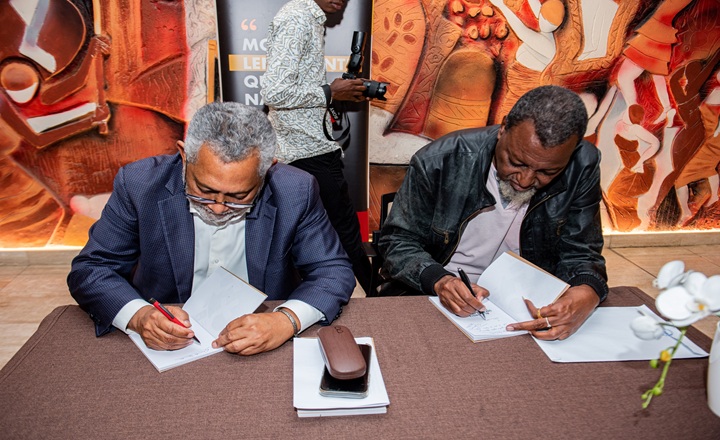
Launched at BCI, a book that immortalizes memories and humor of Zambézia
2026-10-02
Society
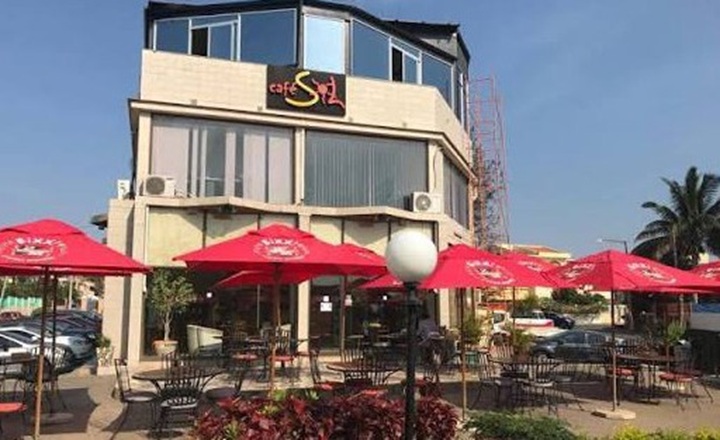
International Coffee Day
2026-10-02
Society
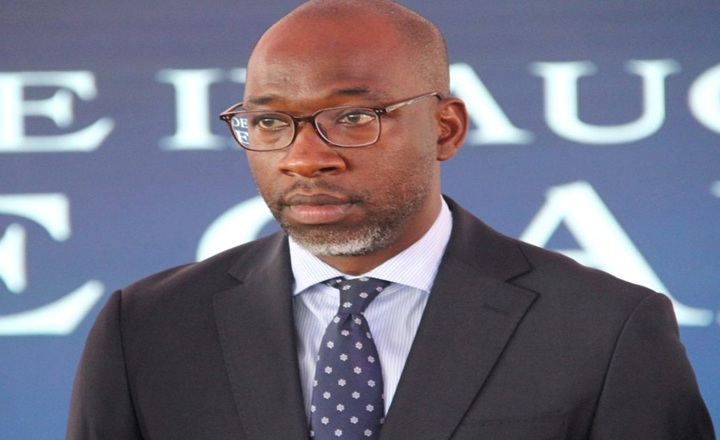
Minister Mathlombe squanders his term on empty promises
2026-10-02
policy
Constitutional Council Awards Purchase of Luxury Vehicles for 49.5 Million Meticais
2026-10-01

Culture
International Coffee Day: Aroma, Flavor, and History
2026-09-30
Copyright Jornal Preto e Branco All rights reserved . 2025