
A YELLOW CARD FOR THE MOZAMBICAN STATE: THE NORMALIZATION OF UNEMPLOYMENT AND THE INSTITUTIONALIZATION OF INFORMALISM
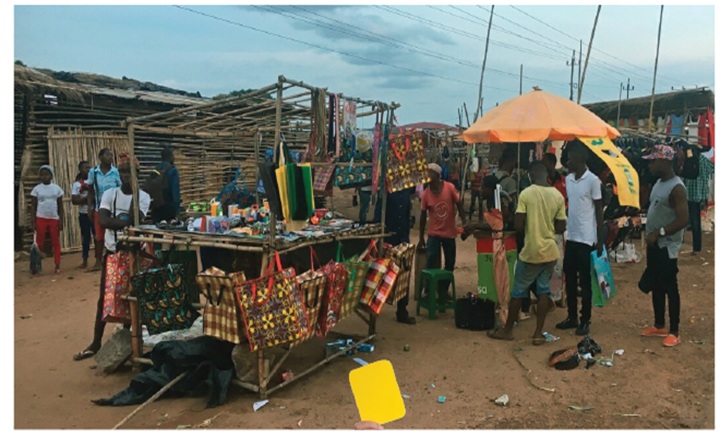
WHEN INFORMAL LIVELIHOOD REPLACES THE STATE
Societies don't only collapse when faced with wars, natural disasters, or large-scale financial crises. Often, their decline begins silently, almost imperceptibly, when abnormal phenomena become normalized, when emergencies cease to provoke outrage, and when structural problems are accepted as inevitable elements of the national landscape. In Mozambique, one of the most worrying phenomena of this nature is the growing normalization of unemployment and the consequent institutionalization of informality as the main mechanism for economic survival for millions of citizens.
Unemployment is no longer treated as a central issue in the national debate. The lack of job opportunities for a significant portion of the working population no longer provokes the same sense of urgency that should mobilize government officials, academics, business leaders, and civil society itself. The problem has been absorbed into collective routine and transformed into a kind of national inevitability.
One only needs to travel through the country's main cities to realize that the employment crisis is inscribed in the very configuration of urban spaces. Sidewalks have ceased to fulfill the function for which they were designed. In numerous parts of the cities, they no longer belong to pedestrians, but to informal commerce. Intersections have become improvised centers of economic activity. Cars have been converted into mobile restaurants, mobile warehouses, and sales platforms.
The most unsettling aspect of this reality lies not only in its scale, but above all in how it has become normalized. The proliferation of street vendors, the disorderly occupation of public spaces, and the increasing degradation of sanitary conditions no longer cause surprise. They have become part of the urban landscape.
This phenomenon is particularly visible in the trade of used clothing. In practically all major Mozambican cities, extensive areas of sidewalks are occupied by mountains of clothing exposed to dust, rain, and pollution. Men and women try on clothes in the middle of the street, without any privacy, in a painful demonstration of how economic necessity can force people to relinquish basic aspects of human dignity.
A similar situation is observed in the sale of food, beverages, and fruit. In numerous locations throughout the cities, products intended for human consumption are sold under conditions that defy the most basic principles of hygiene and public health. The danger is visible. The risks are evident. However, the absence of effective oversight has transformed what should be an exception into a common practice.
Informalism is simultaneously a problem and a solution. It is a problem because it perpetuates precariousness, reduces tax revenue, and limits economic productivity. But it is also a solution because it allows millions of citizens to find a way to make a living in a context where the formal market remains unable to offer them alternatives.
Various estimates indicate that more than half of the country's economically active population is engaged in informal activities. This represents a gigantic universe of workers operating without contracts, without social protection, without access to insurance, without job security, and without any guarantee of future income.
Meanwhile, the State seems to be watching this process with worrying passivity. The issue of employment cannot continue to be treated as a secondary variable in economic policy. It must occupy the center of the national agenda, because social stability, poverty reduction, and the sustainability of economic growth depend on it.
The problem becomes even more serious when analyzed in light of the country's demographic dynamics. Every year, hundreds of thousands of young people enter the workforce and seek opportunities for economic integration. Without a clear strategy to absorb this growing mass of workers, demographics risk becoming one of the greatest threats to the country's future.
A substantial part of this crisis can be explained by the weaknesses of the education system itself. Basic education remains excessively focused on memorizing content, while technical and vocational education remains insufficiently structured and often disconnected from the real needs of the economy.
Mozambique continues to be among the countries with the lowest proportion of citizens with university education. However, it is witnessing an increase in the number of unemployed graduates and masters degree holders. This is a particularly serious contradiction. In a country with high levels of poverty and enormous development needs, the existence of highly qualified professionals without jobs should be considered a national scandal.
Many healthcare facilities continue to face shortages of doctors and nurses. Several schools lack teachers. Despite this, thousands of professionals remain unemployed or working under contract. The explanation often lies in a combination of excessive bureaucracy, corruption, cronyism, and a lack of strategic planning.
The country needs a more ambitious vision. It needs to place employment at the center of public policies. It needs to invest seriously in industrialization, in strengthening small and medium-sized enterprises, in modernizing agriculture, in expanding technical education, and in creating an environment conducive to productive investment.
Above all, Mozambique needs to reject the dangerous idea that unemployment is an inevitable condition and that informality represents a permanent solution. The informal sector can be a temporary escape valve. It cannot be the economic destiny of an entire nation.
What we see today on city sidewalks, in makeshift markets, at intersections crowded with vendors, and on streets transformed into spaces for economic survival, serves as a powerful warning about the weaknesses of a development model that has yet to transform economic growth into shared prosperity.
Ignoring this warning would be a historic mistake. Because poverty, when normalized, ceases to be merely an economic condition. It transforms into a culture of resignation. And when a society resigns itself to poverty, unemployment, and exclusion, it gradually begins to lose the capacity to imagine a different future.
Outras noticias
Culture
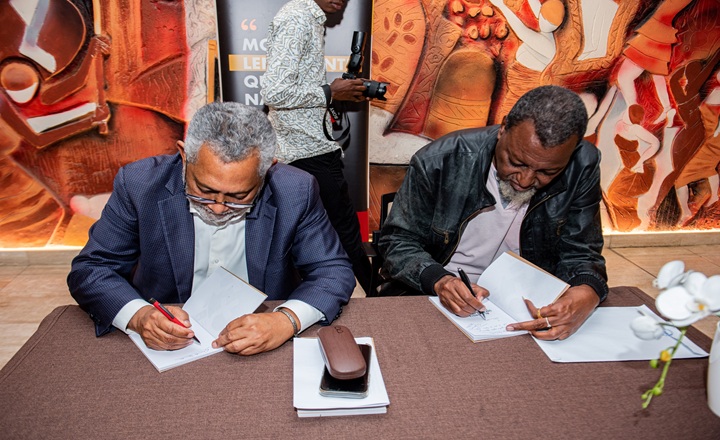
Launched at BCI, a book that immortalizes memories and humor of Zambézia
2026-10-02

Society
International Coffee Day
2026-10-02

Society
Minister Mathlombe squanders his term on empty promises
2026-10-02
policy
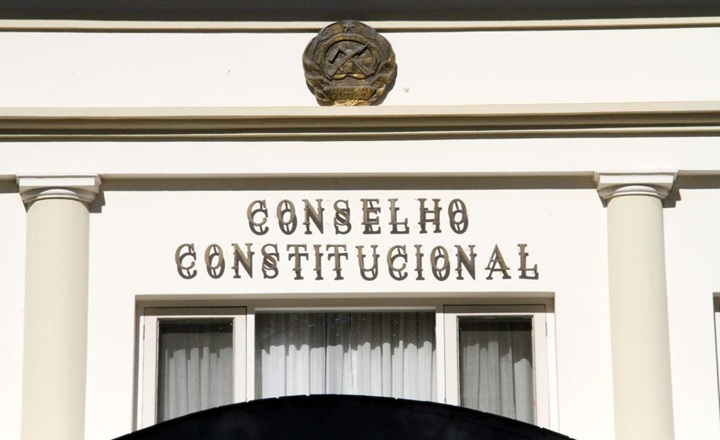
Constitutional Council Awards Purchase of Luxury Vehicles for 49.5 Million Meticais
2026-10-01

Culture
International Coffee Day: Aroma, Flavor, and History
2026-09-30
Copyright Jornal Preto e Branco All rights reserved . 2025